Loop.
Apartment-scale waste & recycling, made participatory.
A shared loop, not a private chore
How might we turn apartment-level waste management into something residents actually participate in — without buying new hardware or shaming anyone?
Role
Product Designer
Timeline
2 Months
Team
2 Designers
Tools
Figma · Illustrator
Pilot result
48%
lift in active recycling participation across two pilot towers over 6 weeks — without adding a single new bin or scanner.
Audit score
62% → 96%
Missed pickups
−71%
Lift in active recycling participation.
Improvement in segregation accuracy.
Finally feels like the whole tower is in on it, not just me and one neighbor.
— Resident, Tower B
Overview
Project at a glance.
A scannable summary — the rest of this page goes deeper.
Problem
Apartment communities lacked efficient waste segregation and recycling systems. Most existing tools were operator-facing — residents had no clear feedback loop, no visibility, and no reason to stay engaged past the first week.
Primary Goal
Build a shared loop residents and staff both participate in — measurable at the tower level, repeatable across communities, and light on hardware.
Users & Stakeholders
- Residents across apartment towers with mixed recycling habits
- RWA committees responsible for community-level outcomes
- Housekeeping & collection staff who handle the physical loop
- Municipal collection partners as downstream actors
Constraints
- Two-month timeline with a single pilot community
- Mixed-language signage and copy (English + regional)
- Hardware-light — no new bins, scanners, or tags
- Operator-friendly — staff should not need a smartphone to participate
My Role & Responsibilities
- Primary research: RWA interviews, resident surveys, and staff shadowing
- Resident dashboard, pickup scheduling, and rewards loop
- Operator-facing route and collection views
- 2-tower pilot setup, segregation audit, and result write-up
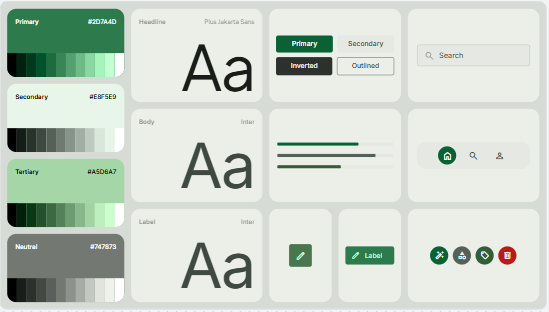
- Brand system, signage, and bin-side iconography
Snapshot
- Role
- Product Designer
- Timeline
- 2 Months
- Team
- 2 Designers
- Tools
- Figma · Illustrator
At a glance
- · RWA interviews + 86-resident survey
- · 3 surfaces, 1 shared community score
- · 48% participation lift in pilot
Case Study
Situation · Task · Action · Result
The condensed story behind the work.
Situation
Indian apartment communities generate enormous waste but recycle a fraction of it. Existing tools optimized for the collection truck, not the human dropping the bag — leaving residents disengaged and operators flying blind.
Task
- Make segregation visible at the tower level, not just the bin.
- Give residents a reason to keep going past week two.
- Give staff route clarity without adding a phone to their workflow.
- Convert engagement into outcomes the municipality can measure.
Action
- 1
Discovery
RWA interviews across 4 communities, resident surveys (n=86), and shadowing 3 collection routes.
- 2
Synthesis
Two JTBD maps — resident ('feel like I'm not alone in trying') and operator ('know what's actually in the bin').
- 3
Architecture
Three surfaces — resident dashboard, pickup schedule, rewards loop — feeding one shared community score.
- 4
Design
Tower-level segregation score, transparent pickup ETAs, and a light gamification layer tied to community perks.
- 5
Pilot
2-tower pilot over 6 weeks with weekly segregation audits and resident pulse checks.
- 6
Handoff
Signage kit, operator playbook, and a metrics dashboard for RWA + municipal reporting.
Result
Recycling participation lift.
Segregation accuracy gain.
Resident engagement uplift.
- Validated tower-level accountability over individual leaderboards.
- Proved hardware-light wins — a better paper card beat a worse app.
- Established a metrics shape RWA + municipal partners both trust.
- Created a replicable playbook for additional tower rollouts.
Deliverables
Solution
Solution & Screens
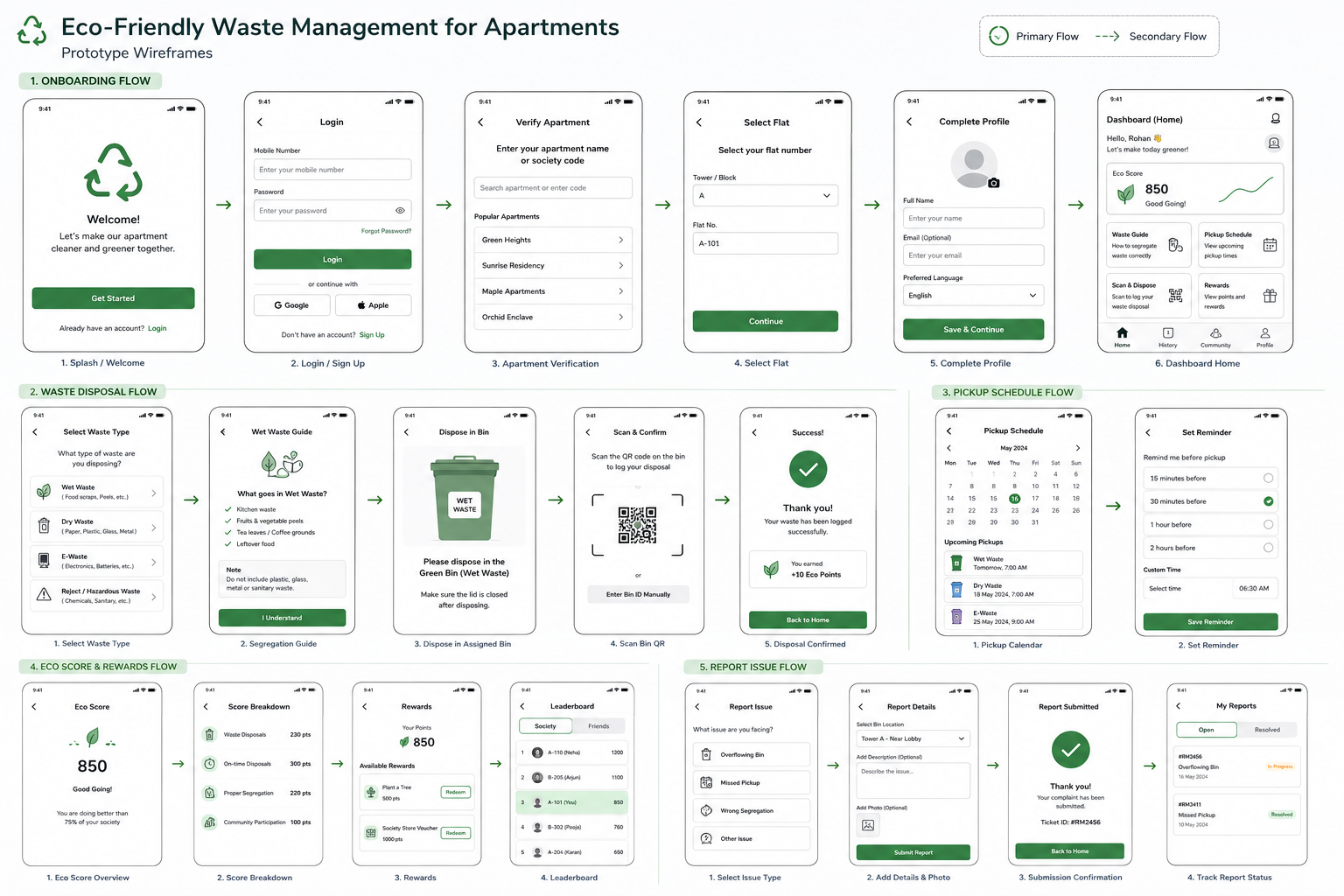
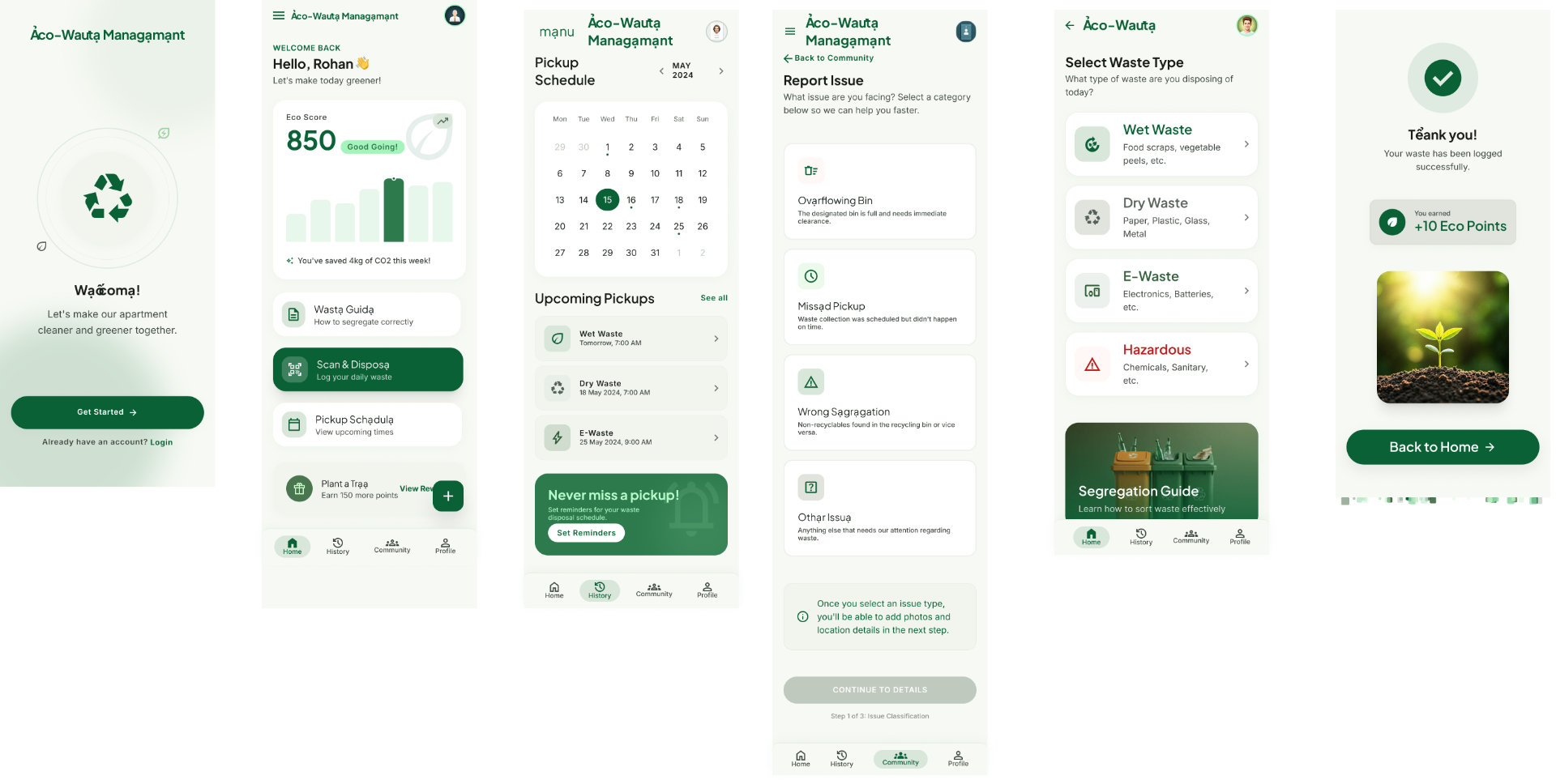
Three surfaces, one shared loop — resident dashboard, transparent pickups, and community-level rewards.
Loop reframes recycling as a tower-level outcome instead of a private virtue. Residents see how their tower is doing, staff see what's actually in the bin, and the municipality gets a number it can act on.
Problem
Invisible segregation
Tower-level score
Residents see how their tower compares — accountability becomes social, not individual.
Problem
Opaque pickup times
Live pickup schedule
Transparent ETAs reduce missed pickups and the daily 'is the truck coming?' anxiety.
Problem
No motivation to participate
Community-level rewards
Points convert to shared perks — a fixed gate, a tower garden, a maintenance discount.
Problem
Staff route inefficiency
Operator route clarity
A printed route card plus simple tags — no smartphone required to follow the plan.
Problem
One-off engagement
Weekly streaks (gentle)
Tower-level streaks, not personal — keeps motivation collective and pressure low.
Artifacts
Architecture
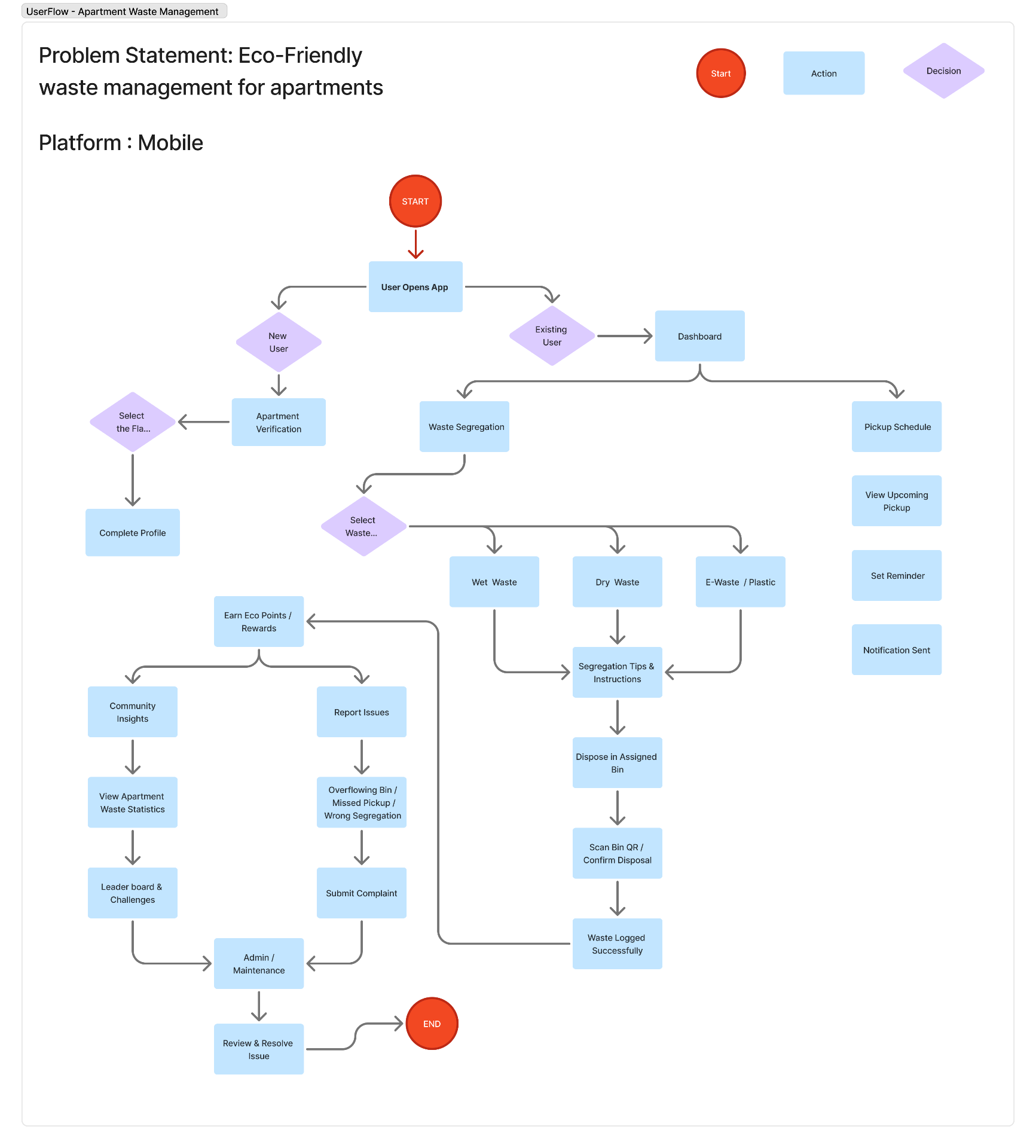
User Flow
End-to-end journey: resident drop-off, segregation audit, pickup scheduling, community score update, and rewards redemption — with an operator route view in parallel.
Validation
Validation & Feedback
How I studied behavior, what feedback changed, and what the data validated.
The pilot ran across two towers for six weeks. Each week paired a physical segregation audit with a short resident pulse and an operator debrief.
Method
Weekly segregation audits, resident pulse surveys (n=86), staff debriefs, and pickup-time logs across two pilot towers.
Participants
~180 households across 2 towers, 6 housekeeping staff, and 2 RWA committee members coordinating the rollout.
Key Findings
- · Tower-level scores out-performed personal leaderboards.
- · Lift signage moved the non-app residents.
- · One A5 route card beat the staff phone view.
What feedback changed
- →Replaced individual leaderboard with tower-level score after residents called it 'judgy'.
- →Added a 'why was this rejected' photo on bad pickups so residents learn instead of guess.
- →Printed pickup ETAs on lift signage for residents who don't open the app.
- →Simplified operator route card to one A5 sheet after staff said the phone version was friction.
What I learned
- Shared accountability outperforms personal leaderboards in residential contexts.
- Transparency about failure (rejected bags) teaches more than badges about success.
- Hardware-light wins — the best feature was a better piece of paper.
Impact
Results & Outcomes
Pilot numbers from two towers over six weeks, plus the qualitative signal that mattered most.
Recycling participation
Segregation accuracy
Resident engagement
Qualitative
"The lift sign is what finally got my mother-in-law on board." — Resident, Tower A
Before
Two motivated neighbors per tower carried the recycling rate. Staff guessed at routes. Audits happened once a quarter, if at all.
After
A tower score everyone can see. A pickup time everyone can plan around. A reward the whole building shares — and a route card the staff can actually use.
Let's Connect
Open to product design, UX research, and design-system roles — full-time, contract, or freelance. Recruiters and designers welcome.
More